
How to Manage Multi-Property Roofing Contracts More Efficiently

How to Manage Multi-Property Roofing Contracts More Efficiently

05.08.2026inIndustry Knowledge
Written by
Rosie Cottell
Rosie Cottell
HOME/KNOWLEDGE CENTRE/how-to-manage-multi-property-roofing-contracts-more-efficiently
Industry Knowledge05.08.2026

How to Manage Multi-Property Roofing Contracts More Efficiently

Multi-property roofing contracts are easier to manage when every property or work package is recorded as a separate job within one connected project. This gives teams detailed site-level records while allowing managers to monitor overall progress, purchasing, variations, invoicing, retentions and profitability from one place.

Multi-property roofing contracts can represent valuable, long-term work. They can also become difficult to manage remarkably quickly.

A single contract might cover dozens—or even hundreds—of homes, commercial units, schools or public buildings. Each property may require its own survey, specification, access arrangements, scaffold, materials, site team, photographs, safety documents, invoices and handover information.

At the same time, the contractor needs to understand how the whole contract is progressing.

Which properties have been completed? Which are awaiting access? Where have defects or additional works been found? What has been purchased? What has been invoiced? How much is being held in retention? And, most importantly, is the overall project still profitable?

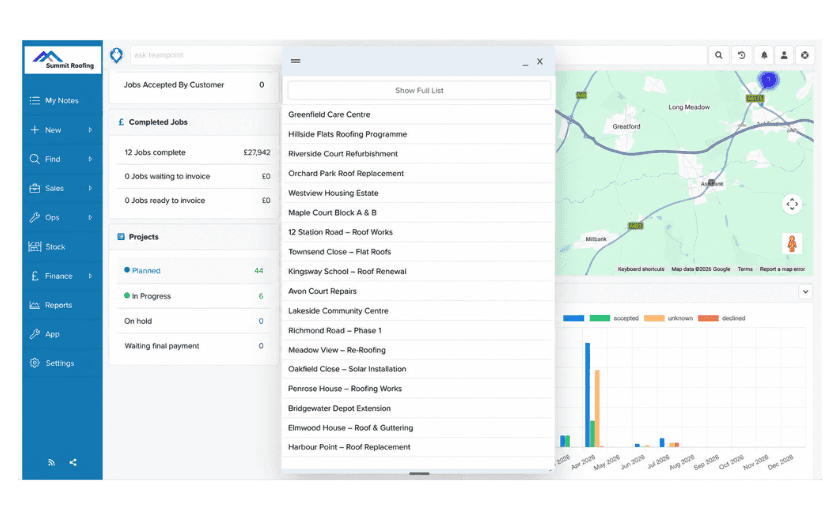
Multi-property roofing contracts are best managed through one overall project, with separate jobs for each property, visit or work package. This keeps site-level details, evidence and communications attached to the correct job while giving managers a complete view of progress, purchasing, variations, invoicing, retentions and profitability.

Managing each address as a completely separate job can make this wider picture difficult to see. A more effective approach is to manage the contract as one connected project, while retaining a detailed record for every property and visit.

Connecting Property-Level Detail with Project-Wide Visibility

A straightforward roofing repair can often be managed as one job, from quotation through to completion and invoicing. A multi-property contract brings a different level of complexity.

The work may cover dozens of addresses, each with its own survey, access arrangements, roof specification, scaffold requirements and schedule. Different gangs and subcontractors may be involved, with repeat visits, additional work, purchasing, staged payments, retentions and handover information all needing to be tracked across the wider programme.

Each property needs its own clear record, but the contractor also needs to understand how the contract is performing as a whole. That means being able to see what has been completed, what is delayed, what has changed, what has been invoiced, what remains outstanding and whether costs are staying in line with expectations.

Information can quickly become spread across separate job records, spreadsheets, email chains and shared folders. Purchasing may not be linked clearly to the work it supports. Additional work may be agreed without being reflected in the total contract value. Invoices, retentions and outstanding work can then become harder to reconcile.

The aim is to keep the detail for each property while connecting every job to one wider project. This gives teams a clear operational record for every address and gives managers a complete view of progress, costs, invoicing, retentions and profitability across the contract.

Use One Project to Bring the Whole Contract Together

A project can act as the central record for the full programme of work, whether the contract covers many properties or one complex site.

For a housing association roofing programme, council portfolio, school estate or commercial property contract, the project can bring every property and work package into one connected view. The same structure can also work well for a single property where the main roof, garage roof, flat roof, guttering or solar installation need to be managed separately.

Each area of work can have its own job, schedule, team, specification, costs and completion record. All related communications, files, photographs, forms, notes and supporting documents can stay with the relevant job, giving office and site teams a complete history of what has happened.

Use One Project to Bring the Whole Contract Together

The project then holds the accepted quotation, planning information, individual jobs, purchasing, invoices, variations and overall financial performance in one place. Variations can be linked to the part of the work they affect while still updating the wider contract value.

This gives teams the detail they need at job level and gives managers a clear view of progress, costs, invoicing, retentions and profitability across the whole contract.

Through working with roofing contractors, TeamPoint has found that larger contracts are often better managed as projects containing several connected jobs, rather than as a series of unrelated job records.

Create a Separate Job for each Property or Task

Using a project does not mean placing every part of the contract into one large job record. Each property or work package can have its own job, with the level of detail needed to manage that part of the work properly.

For a multi-property contract, this may mean creating a separate job for each address. On a single, more complex property, separate jobs may be used for the main roof, garage roof, flat roof, surveys, scaffolding, repairs, inspections, snagging or return visits.

Each job can hold the relevant site details, specification, access information, schedule, assigned team, safety records, materials, photographs, forms, communications, signatures and completion documents. Previous work linked to the site also remains available for reference, giving the team a clearer understanding of the property’s history before new work begins.

Site teams can access and update job information through the mobile app, including where connectivity is limited, with records synchronised when a connection becomes available.

Each job remains manageable in its own right while still contributing to the wider roofing project. Managers can follow progress across the full contract without losing the detail attached to each property or work package.

Plan the Work Before It Reaches Site

Larger roofing projects involve much more than assigning dates to site teams. Before work can begin, the business may need to confirm surveys, specifications, permits, client approvals, access arrangements, scaffolding, safety documentation, competence requirements and subcontractor availability.

Materials and purchasing also need to be planned early. Teams need to know what has been ordered, what is already held in stock, what has been allocated to the project and whether key items will arrive before the scheduled start date. Keeping those records connected to the project helps reduce delays, duplicated orders and last-minute shortages.

Plan the Work Before It Reaches Site

A project-level checklist can bring these tasks into one place, creating a clear record of what must be completed before work proceeds. Some actions may apply to the entire contract, while others relate to a particular property or work package.

This gives managers a clearer view of project readiness and helps ensure that labour, access, equipment, materials and documentation are in place before the team arrives on site.

Coordinate Roofing Gangs and Subcontractors

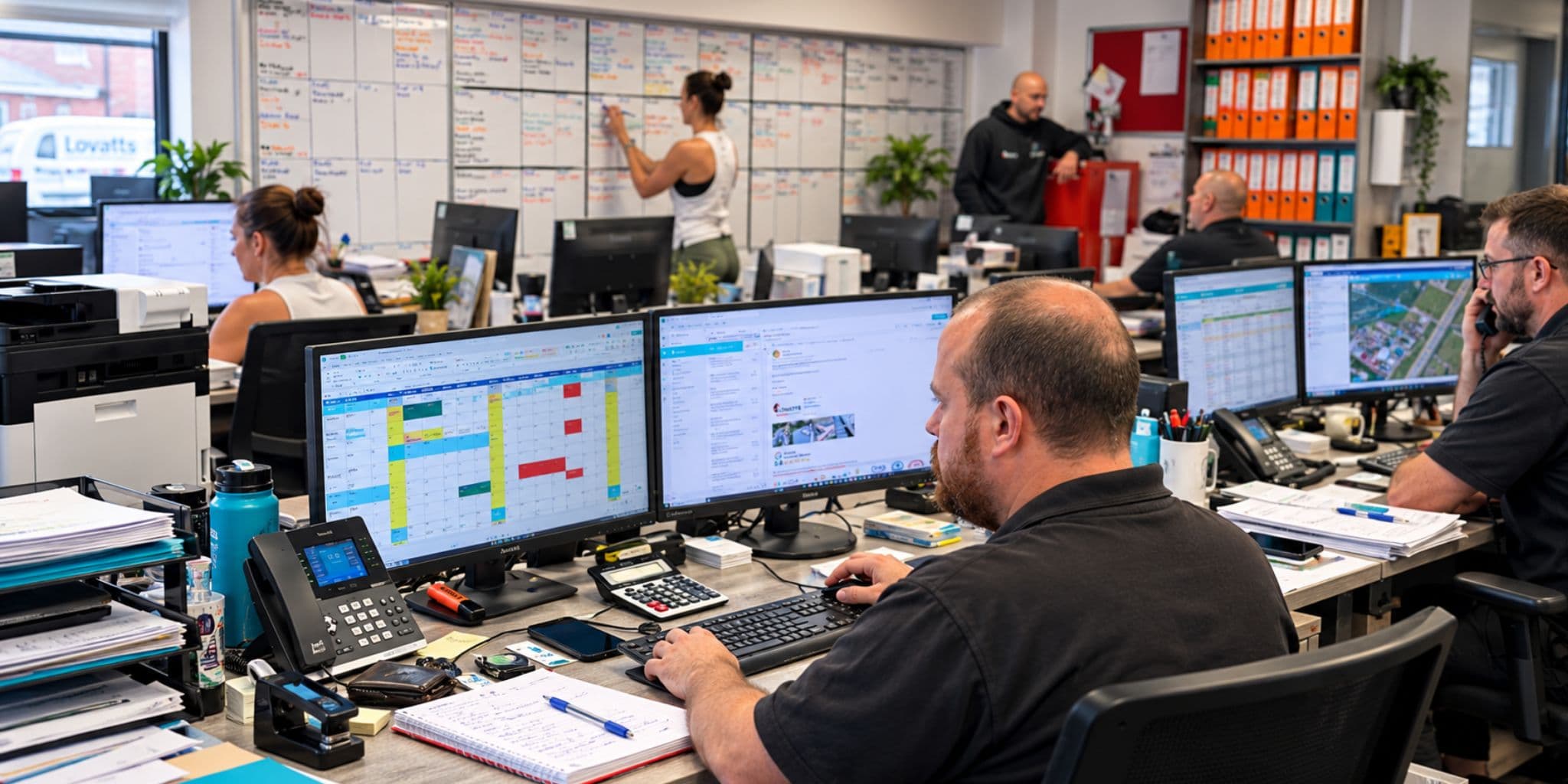
A multi-property roofing programme may involve several teams working across different locations at the same time. Each job needs to show who is responsible for the work, when it is scheduled and whether the right skills, qualifications, access arrangements, scaffolding and materials are in place.

Subcontractor activity also needs to be recorded clearly. Managers should be able to see what work has been assigned, what has been completed, what evidence has been provided and where follow-up visits or further checks are still required.

Each property or work package can be scheduled independently while remaining connected to the wider project. Project and job statuses can also be configured around the contractor’s workflow, helping teams distinguish between work that is planned, in progress, awaiting access, on hold, complete or awaiting payment.

This allows the programme to change as priorities, access or site conditions change, while preserving a clear view of how every job contributes to the overall contract.

Keep the Details of multiple Sites within the Project

Roofing contractors need to show how work was planned, carried out and completed. On a multi-property contract, that evidence must stay connected to the correct address, job or work package.

Each job can hold its own RAMS, Work at Height checks, toolbox talk records, photographs of access and edge protection, installation images, product information, Safe2Torch evidence, inspection records, snagging details, completion certificates and client or resident sign-offs.

Keeping this information with the individual job helps office teams see what has happened on site and reduces the risk of photographs, forms or approvals becoming detached from the property they relate to.

Property-level records can support individual completion and sign-off, while the connected project record makes it easier to prepare a consolidated handover for the full programme.

Across the wider project, these records create a complete audit trail and support accurate handover information for clients, inspectors and other stakeholders.

Record Purchasing and Stock at the Right Level

Not every project cost belongs to one individual property. Plant hire, welfare facilities, bulk material orders, programme-wide subcontractor costs and other shared expenses may apply across the whole contract. Other purchases, such as replacement decking, additional insulation or property-specific materials, relate to one address or work package.

A connected project structure allows these costs to be recorded at the right level. Shared purchasing can sit against the overall project, while property-specific items remain linked to the relevant job. Both contribute to the project’s wider financial position.

Record Purchasing and Stock at the Right Level

Stock control also plays an important role. Warehouse checks and stock counts help teams understand what is already available, what has been allocated and what still needs to be ordered before work begins. This reduces duplicate purchasing, shortages and avoidable delays.

Bringing project purchasing, job-level costs and stock records together gives managers a more accurate view of expenditure as the contract progresses. The original contract value provides the starting point, but live cost information shows whether the work is continuing to perform as expected.

Manage variations within the Project

Roofing work can reveal issues that were not fully visible at quotation stage. Damaged substrates, rotten timber, hidden structural defects, additional insulation, fire-safety requirements or changes requested by the customer can all affect the scope and value of the work.

These changes need a clear process for recording, pricing and approval. In TeamPoint, a variation can be raised as an additional quotation linked to the existing project. It sets out the extra work and its cost, while keeping the original project record intact.

Once the customer accepts the variation, the additional value is added to the overall project total. This creates a clear record of what changed, why the extra work was needed, what it would cost and when it was approved.

Keeping variations connected to the project helps protect margins, supports accurate invoicing and reduces the risk of additional work being forgotten, disputed or left outside the financial record.

Match Invoicing to the Contract

Multi-property roofing contracts can be billed in different ways, depending on the customer, the scope of work and the agreed payment terms.

Some contractors invoice each property as it is completed. Others invoice in batches, at agreed milestones, through monthly valuations or once the full project is finished. Deposits, staged payments and separate invoices for approved variations may also form part of the arrangement.

TeamPoint supports invoicing at both job and project level, allowing the billing process to reflect the way the contract has been agreed.

This gives roofing businesses greater flexibility when working with councils, housing associations, main contractors, commercial customers and grant-funded programmes, while keeping invoices connected to the work they relate to.

Match Invoicing to the Contract

Track Retention Payments from the Start

Retentions can have a significant effect on cash flow in roofing. A project may be complete and profitable, while part of the payment remains withheld until the end of a defects period or another agreed release date.

TeamPoint allows the retention terms and predicted release date to be recorded at the beginning of the work. Retention values can then be applied to jobs and invoices, giving the business a clear view of what is being held, what has been released and what remains outstanding.

When the actual retention release date is confirmed, the related invoice dates can be updated retrospectively. This keeps the financial record accurate and ensures the correct information is exported into the connected finance software.

Roofing contractors can then see who owes the money, when it is expected and how much remains tied up across the business. This creates a clearer distinction between project profitability and available cash, which is especially important when several contracts carry retentions at the same time.

Monitor Project Profitability as Work Progresses

Completing individual jobs does not always show how the wider roofing contract is performing. Managers also need a clear view of the project’s financial position as work moves forward.

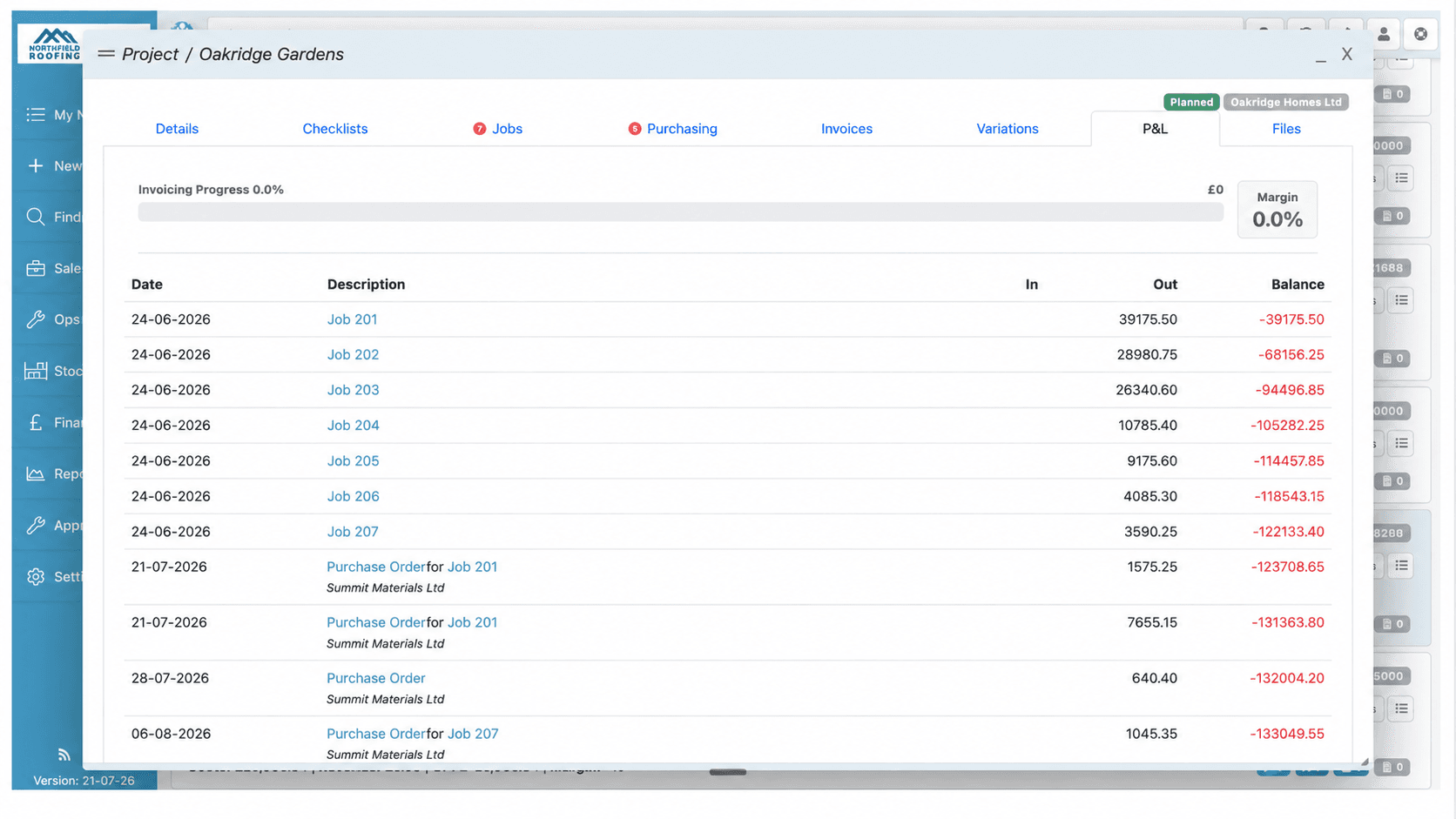
TeamPoint’s Project Profit and Loss view brings together the original contract value, accepted variations, project and job-level purchasing, invoices and other recorded costs. This gives project managers a current view of gross margin and helps them compare actual performance with the expectations set at quotation stage.

Retention exposure can also be monitored separately, helping finance teams understand how much of the project value remains tied up and when it is expected to become available.

The project view can highlight where profitability is beginning to change. Additional visits, rising material costs, subcontractor charges or work carried out before a variation has been approved can all affect the final margin.

Keeping this information connected to the project allows managers to identify financial pressure earlier and make more informed decisions before small cost increases become larger problems.

Give Customers a Clearer View of Progress

Well-structured project information makes customer reporting more accurate and less time-consuming. Instead of gathering updates from separate job records, spreadsheets and messages, contractors can see the current position of each property within the wider programme.

This may include work that is planned, in progress, completed, awaiting access, on hold, waiting for a variation to be approved, ready to invoice, within a defects period or awaiting final payment.

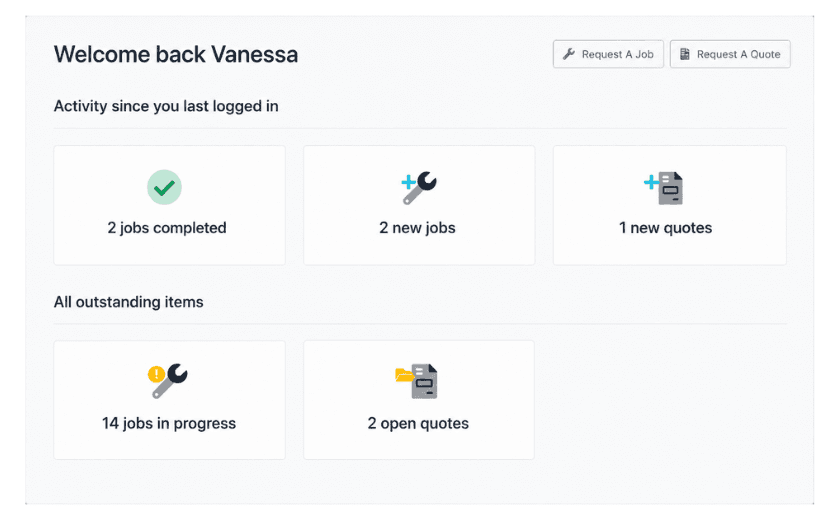
TeamPoint’s customer portal can also give customers a clearer way to stay involved. Relevant documents and updates can be shared through the portal, while quotations and variations can be reviewed and approved without relying on long email chains. It also provides a central place for ongoing communication about the project.

Give Customers a Clearer View of Progress

Office teams, site teams and customers can work from the same information, reducing confusion and making progress, approvals and next steps easier to manage.

This is particularly useful when working with housing associations, councils, managing agents, main contractors and commercial property owners.

Managing Multi-Property Roofing Projects in TeamPoint

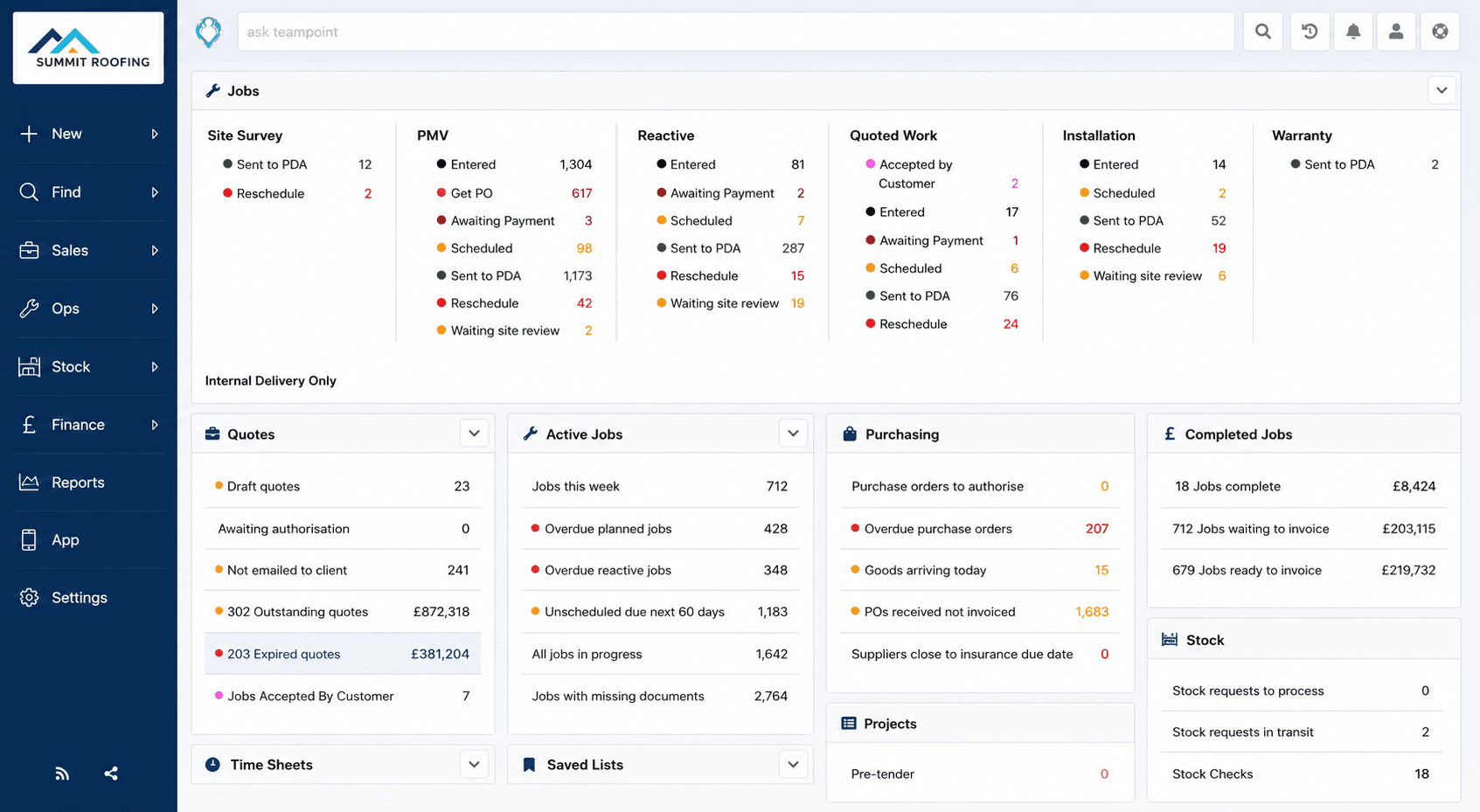
TeamPoint Projects brings the full contract into one connected structure. Related jobs, purchasing, stock, invoices, variations, retentions, communications, documents and project costs can all be managed around the same project record.

Each property, visit or work package can still be handled as an individual job, with its own schedule, team, files, photographs, forms, evidence and history. At the same time, directors, project managers and finance teams can see how the wider programme is progressing and how it is performing financially.

This gives roofing contractors both property-level detail and project-level visibility. Scheduling, compliance, customer approvals, purchasing, invoicing, retention exposure and profitability remain connected throughout the life of the contract.

Rather than piecing the project together from separate jobs, spreadsheets, emails and finance records, the business can work from one shared view of the complete programme.

For roofing contractors managing multi-site roofing projects, housing association programmes or complex single-property contracts, this creates a clearer way to connect operational detail with commercial performance.

You may also like

A Practical Guide to Modernising Your Service Business
Digital Transformation
Written by
Rosie Cottell
Rosie Cottell

A Practical Guide to Modernising Your Service Business

A practical guide to modernising your field service business by improving the way people, information and technology work together. Explore how to strengthen day-to-day operations, support employees, build compliance into every job, use data more effectively and create a business that keeps improving.

03.08.2026
Read More
Is It Time to Change Your Job Management Software?
Job Management Software
Written by
Rosie Cottell
Rosie Cottell

Is It Time to Change Your Job Management Software?

Replacing your field service management software is a significant decision. If your current platform no longer reflects the way your business operates, this guide will help you understand when it's time to make a change, what to look for in a new system and how to plan a successful transition with minimal disruption.

20.07.2026
Read More
How to Grow Your Service Business Without Losing Control.
Running a Service Business
Written by
Rosie Cottell
Rosie Cottell

How to Grow Your Service Business Without Losing Control.

Growing a successful service business isn't just about winning more work. It's about making sure your business continues to run efficiently as it becomes larger and more complex. This article explores the habits shared by successful service businesses, from building dependable processes and keeping information connected to managing projects, compliance and business performance. Discover how the right operational approach helps growing businesses stay organised, improve profitability and continue growing without losing control.

16.07.2026
Read More
Has Your Service Business Outgrown the Way It Operates?
Running a Service Business
Written by
Rosie Cottell
Rosie Cottell

Has Your Service Business Outgrown the Way It Operates?

As service businesses grow, the systems and processes that once worked well can gradually become disconnected, making information harder to find, increasing administration and slowing growth. This article explores six signs your business may have outgrown the way it operates—and how connected job management software can help simplify operations and support continued growth.

14.07.2026
Read More