A Practical Guide to Modernising Your Service Business

A Practical Guide to Modernising Your Service Business

03.08.2026inDigital Transformation
Written by
Rosie Cottell
Rosie Cottell
HOME/KNOWLEDGE CENTRE/a-practical-guide-to-modernising-your-service-business
Digital Transformation03.08.2026

A Practical Guide to Modernising Your Service Business

A practical guide to modernising your field service business by improving the way people, information and technology work together. Explore how to strengthen day-to-day operations, support employees, build compliance into every job, use data more effectively and create a business that keeps improving.

This guide is written for business owners, managing directors, operations managers and anyone responsible for improving the way a field service business operates. Whether you are looking to increase efficiency, review existing ways of working, plan for future growth or evaluate new technology, including job management software, it provides a practical framework for building a more connected, productive and adaptable business.

This guide is not intended to provide all the answers. Every field service business is different, and there is no single blueprint for success. Instead, it brings together ideas we have developed through working alongside service businesses, observing how successful organisations make decisions and evolve, and drawing on wider thinking from business leaders and industry bodies. Our aim is not to tell you how to run your business, but to share practical ideas that may help you reflect on your own operation and identify opportunities worth exploring.

Modernising a field service business means continually improving the way it operates so it can respond confidently to changing customer expectations, evolving technology and new opportunities. At its heart, modernisation is about people: how knowledge is shared and used, how effectively teams communicate, and how better ways of working are created.

Technology can support this in many different forms. Field service management software, accounting systems, mobile apps, cloud platforms, connected sensors, GPS tracking and artificial intelligence are all tools that can help businesses work more efficiently, improve visibility and make better use of the knowledge they already hold.

This guide explores the key building blocks of a modern field service business, including operational processes, connected information, employee experience, automation, artificial intelligence and preparing for future change. It introduces each subject from a practical business perspective, with many of the themes explored in greater depth throughout the TeamPoint Knowledge Centre.

The aim is to help you build a field service business that is well organised, adaptable and ready for whatever comes next.

Understand your business before you change it.

Meaningful improvement starts with understanding how your business really operates right now.

It is easy to assume you understand how the business operates, particularly when you are involved in it every day. Those assumptions can then shape significant decisions about technology, processes or responsibilities, even though they may not reflect what is really happening. Reliable data is a valuable starting point, but it should be considered alongside the day-to-day reality: observe how work is carried out, speak to the people involved and identify where delays, frustrations and workarounds actually occur.

Before introducing new technology, redesigning workflows or changing responsibilities, take the time to see how work flows through the business and understand the real challenges your employees face.

One way to do this is to follow a typical job from the first customer enquiry through to final payment. Rather than relying only on reports or process maps, spend time watching how work actually happens. Notice how information moves through the business, where decisions are made and where progress depends on people chasing, checking or remembering what to do next.

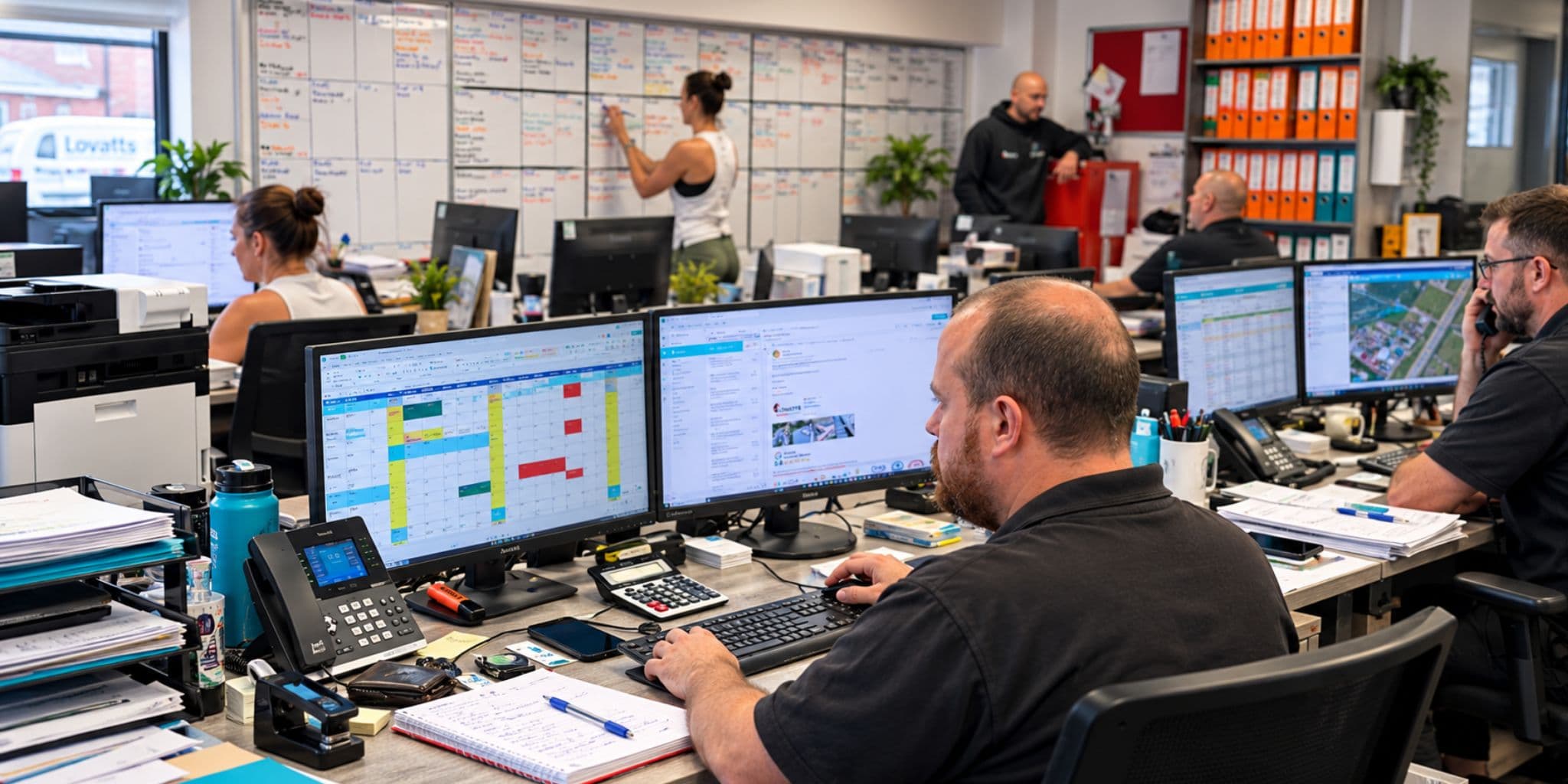
Spend time in the office with the people answering customer enquiries, preparing quotations, scheduling work and raising invoices. Watch how often they are interrupted, how easily they can find the information they need and where work comes to a stop while they wait for an answer from somebody else. The small frustrations that have become accepted as “just part of the job” often point to the biggest opportunities for improvement.

Spend time on a job too. Join an engineer or surveyor for part of the day. Watch how they prepare before leaving, what information they have available on site and what happens when circumstances change. Are they able to concentrate on the job they have been trained to do, or are they wasting time chasing information, returning for forgotten materials or duplicating administration?

By the end of this exercise, you should have a much clearer understanding of how work really flows through your business, where unnecessary friction exists and which improvements are likely to make the greatest difference. This gives you a stronger basis for deciding what needs to change, rather than introducing new technology or processes based on assumptions.

Create the Right Environment for People to Succeed.

Successful businesses are built on the knowledge, judgement and commitment of employees. Engineers, surveyors, estimators, planners, project managers and office teams all contribute skills developed over many years. Recruiting, training and retaining capable people takes considerable time and investment, so it makes sense to create an environment in which they can perform at their best.

In many businesses, skilled employees spend too much of their day overcoming operational obstacles rather than applying their expertise. Time is lost searching for information, duplicating administration, chasing updates, answering avoidable phone calls or relying on colleagues to fill gaps in knowledge. Individually, these interruptions may seem insignificant, but together they reduce productivity, increase frustration and distract people from the work that creates the greatest value.

Modern businesses recognise that the way people experience work has a direct impact on operational performance. When employees have access to reliable information, understand what is expected of them and can rely on clear, well-designed processes, they make better decisions, communicate more effectively and deliver a better service to customers.

Giving people the information and authority they need also creates a more responsive organisation. Problems can be resolved quickly rather than continually referred back to managers, while experienced employees are able to concentrate on the work that makes the best use of their knowledge.

Expectations of employers are changing too. People increasingly look for organisations that invest in them, embrace better ways of working and remove unnecessary frustration from the working day. This might include offering greater flexibility, providing clearer opportunities for progression, exploring initiatives such as a four-day working week where appropriate, or equipping employees with better tools and information.

A well-organised working environment creates a genuine competitive advantage. Talented people are naturally attracted to organisations that communicate clearly, respect their time and give them the support needed to do their jobs well. Removing unnecessary obstacles not only improves productivity; it helps create a business where good employees want to stay.

Develop Skills and make Better use of Knowledge.

Creating the right working environment is only part of the picture. Technical standards, industry regulations, customer expectations and working practices continue to evolve, making continuous learning an important part of running a successful service business.

Organisations that invest in training, encourage knowledge sharing and create opportunities for employees to broaden their skills are better equipped to adapt to new markets, new technologies and changing customer needs. Development also gives people a clearer sense of progression, helping them see how their role can grow alongside the business.

It is equally important to understand the capabilities that already exist within the organisation. Keeping accurate records of qualifications, certifications, competencies and ongoing training allows managers to allocate work with confidence, identify development needs, demonstrate compliance and plan for future growth.

Matching the right people to the right work improves quality, reduces risk and helps specialist knowledge create the greatest possible value. It also makes it easier to identify where the business may be vulnerable because too much responsibility or expertise rests with one person.

A useful question to ask is: “If one of our most experienced people was away for two weeks, what would become difficult?” If the wheels would fall off, there is an opportunity to strengthen the way knowledge is captured and shared.

Technology can support this by making training records, operating procedures and job information accessible across the business rather than leaving them stored in notebooks, email inboxes or individual memories. When information is easier to find and understand, new employees become productive more quickly, experienced people spend less time answering the same questions, and valuable knowledge remains available as the business grows and changes.

Modernising the business therefore means making better use of the expertise already within it. By developing skills, sharing knowledge and reducing dependence on individuals, you create an organisation that is more capable, resilient and prepared for future opportunities.

Invest in Technology that Creates Real Value

Artificial intelligence, automation, field service management software, connected devices and mobile technology are changing the way service businesses operate. New products appear almost every week, each promising to save time, reduce costs or transform productivity.

Separating genuine opportunities from good marketing is becoming increasingly difficult.

Rather than asking, “How can we use AI?” or “Should we invest in this new technology?”, start with: “What problem are we trying to solve?” Technology creates real value when it removes a genuine obstacle, improves the way people work or helps the business make better decisions.

A field service management platform can provide the connected foundation that makes automation and artificial intelligence more useful, because both depend on accurate, accessible information.

The same principle applies to every investment. AI can help analyse information, draft customer communications or automate repetitive administration. Mobile technology puts information into the hands of people on site. Barcode scanning, QR codes and connected assets improve traceability and visibility. None of these technologies creates value simply because it exists. Their value comes from being used to solve a problem that is costing the business time, money or unnecessary effort.

Where possible, measure the problem before trying to solve it. If invoicing takes five days after a job is completed, understand why. If engineers regularly make return visits because information or materials were not available first time, quantify how often it happens. If planners spend hours every week updating spreadsheets or answering progress calls, work out how much time that consumes. Understanding the scale of a problem makes it much easier to judge whether an investment is likely to deliver a worthwhile return.

When you are evaluating technology, ask suppliers to demonstrate how it would solve one of your real operational challenges rather than delivering a standard product demonstration. Use examples from your own business, involve the people who will use it every day and encourage them to challenge how the technology fits into their working practices. A good technology partner will spend as much time understanding your business as demonstrating their product.

Whatever you decide to change, involve the people affected as early as possible. Explain the problem being addressed, invite practical feedback, provide appropriate training and allow time for new ways of working to settle. Even a well-designed change can fail if people do not understand why it is happening or feel supported in using it.

The purpose of technology is to improve the business. Every investment should make the business easier to run, help your people work more effectively and deliver a better experience for your customers. If it achieves those objectives, the technology has earned its place. If it does not, it is worth asking whether you were solving the right problem in the first place.

Connect Information Across your Business

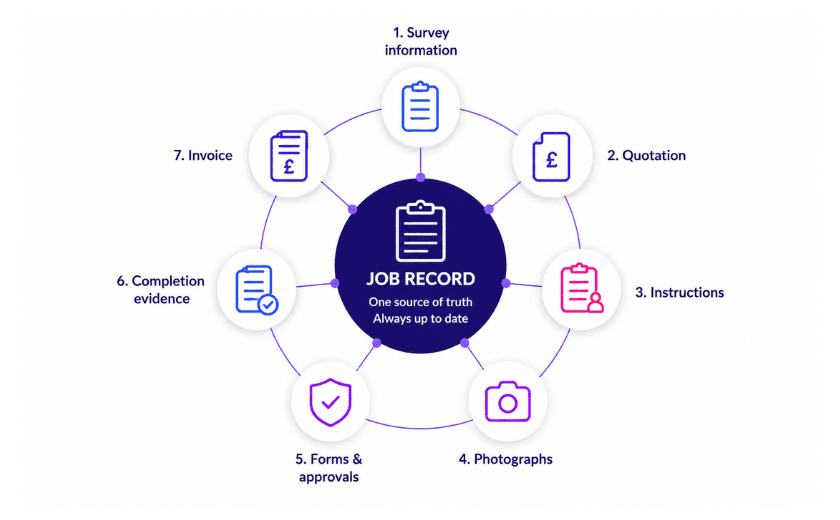
Every job you do creates information: customer details, quotations, schedules, site instructions, risk assessments, photographs, material costs, completion records, invoices and payment information. When those details are spread across spreadsheets, email inboxes, messaging apps, paper files and separate software, people spend too much time searching, checking and asking one another for updates.

A modern service business needs a dependable flow of information from the first customer enquiry through to completion, invoicing and reporting. For many organisations, job management or field service management software becomes the operational backbone, connecting customer records, quotations, schedules, mobile working, compliance, purchasing, job costs and invoices in one place.

Connect Information Across your Business

Modernisation does not mean replacing every tool the business already uses. Accounting software, document storage, fleet tracking and specialist compliance systems may all continue to play an important role and, where appropriate, integrate with the main platform. The aim is to establish a reliable source of information for each customer, site and job, and to connect systems wherever possible so details do not have to be repeatedly copied, retyped or passed between departments.

Information captured at the beginning of a job should then support the stages that follow. Details recorded during a survey can be reused in quotations, site instructions, compliance documents and customer reports. Engineers and operatives can add photographs, signatures, forms and material usage while on site, creating a clear golden thread of evidence from the original enquiry through to completion and invoicing. This reduces administration, helps prevent different versions of the same information appearing across the business and reduces errors.

Keeping information organised and accessible also makes you audit-ready. When each job has a clear record of what was planned, who completed the work and which checks and approvals took place, evidence is easier to find and questions can be answered quickly.

The same clarity can also strengthen public and private tender submissions. Being able to demonstrate reliable processes, clear responsibilities and accurate records gives buyers greater confidence that the business can deliver work professionally and meet contractual requirements.

Start by connecting the stages where information is most often duplicated or delayed. This might include moving an accepted quotation into a job, sending current instructions to the site team, bringing completed records back to the office, and using approved job information to support costing and invoicing. Clear access permissions can then ensure that everyone sees what they need without exposing sensitive or irrelevant information.

Clear access permissions remain important, but with a managed platform the underlying cyber security, backups and service continuity should be built into the service and handled by the provider.

The goal is to make accurate, useful information easy to find. By enabling the right people to see the right information at the right time, the whole business becomes easier to coordinate, manage and grow.

Build Compliance into Everyday Operations

Compliance has always been part of running a responsible service business, but expectations around evidence are increasing. Customers, regulators, insurers, principal contractors and procurement teams increasingly want more than an assurance that work was completed correctly. They may expect businesses to show who carried it out, whether that person was competent, which checks were completed, what changed during the job and where the supporting evidence is held. Building-safety guidance now places particular emphasis on maintaining accurate, up-to-date information and sharing it with those who need it.

Build Compliance into Everyday Operations

The exact requirements vary between industries. Roofing businesses must plan work at height, assess fragile surfaces and provide appropriate training, information and supervision. Drainage and waste contractors may need environmental permits and waste transfer records, while utilities businesses manage street-work permits, inspections and reinstatement evidence. Electrical, plumbing and HVAC contractors must monitor competence and certification, including Gas Safe or F-gas requirements where relevant. Solar and retrofit work can involve MCS requirements, network approvals, commissioning records, warranties and photographic evidence. Facilities management, building maintenance and commercial cleaning businesses may also need to manage records relating to asbestos, fire safety, water hygiene, electrical testing, COSHH, lone working and planned maintenance. The detail differs, but the underlying challenge is the same: making sure the right actions happen and that the business can prove they happened.

When compliance is treated as paperwork to complete after the work, gaps are almost inevitable. A photograph is forgotten, a certificate expires, the wrong form is used or an approval remains buried in an email inbox. The problem may only come to light when an invoice is held back, a customer raises a dispute, an auditor asks for evidence or the business is completing an important tender. Poor records can delay payment, damage customer confidence, weaken the business’s position in a dispute or exclude it from future work. More importantly, missing information, unclear responsibilities or outdated instructions can expose employees and customers to avoidable risk.

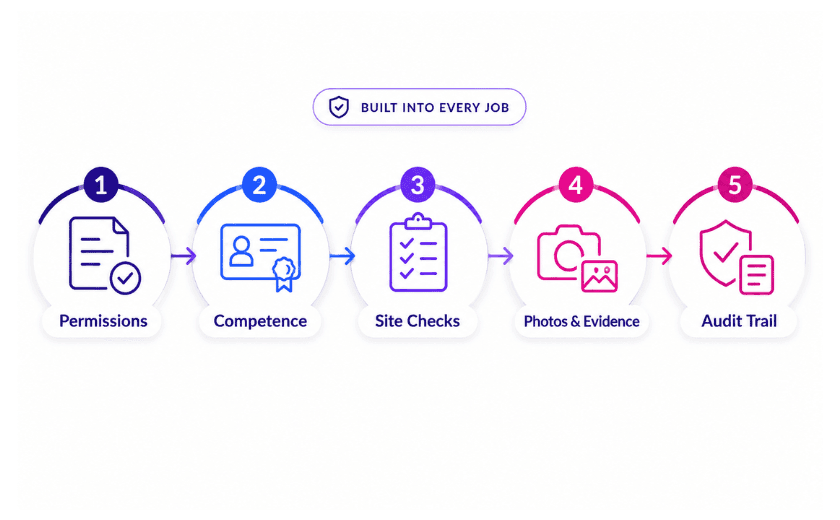
A modern approach builds compliance into the normal flow of every job. Before work is scheduled, the business should be able to confirm that required permissions are in place, relevant qualifications remain current and the correct instructions and risk information are available. While the work is under way, site teams should be prompted to complete the forms, photographs, checks and approvals relevant to that particular job. Once it is finished, the evidence should remain connected to the customer, site, asset or project rather than being scattered across separate folders and devices.

This does not mean adding the same long checklist to every job. Compliance should reflect the work being carried out, the site, the customer and the level of risk. A solar installation requires different evidence from a commercial cleaning visit or a blocked-drain callout. Well-designed workflows help people concentrate on what matters by presenting the right requirements at the right stage.

Start by reviewing the areas where the risk of failure is greatest or where evidence is most frequently requested. Look at recent audits, customer queries, rejected invoices, tender questionnaires and near misses. Identify which checks depend on memory, which qualifications are monitored manually and which documents are hardest to retrieve.

Technology can help by issuing renewal alerts, controlling access to current documents, guiding employees through job-specific forms and creating a clear audit trail. It should support good judgement rather than replace it. Employees still need appropriate training, clear responsibilities and the confidence to stop work or raise a concern when something is wrong.

A strong compliance culture can also support recruitment and retention. Skilled people are more likely to value an employer that takes safety seriously, provides clear information and gives them the tools to complete work professionally. It protects employees, reduces uncertainty and demonstrates that the business respects the responsibility placed on them.

Compliant working should become the easiest and most natural way to complete a job. When checks, evidence and responsibilities are built into everyday operations, the business is better prepared for audits, tenders and changing requirements—and far less likely to discover an important gap when it is already too late.


Measure What Matters

Being busy is not the same as being profitable, productive or resilient. A modern service business uses operational data to understand why results are changing and where action is needed.

Field service reporting can reveal far more than headline revenue. Useful measures might include quotation conversion, average job value, work in progress, first-time fix rate, jobs completed per person, travel time, response times, repeat visits, labour and material costs, time from completion to invoicing, contract profitability and compliance completion. Looking at these measures by customer, job type, contract, division or location can expose patterns that would otherwise remain hidden.

The most useful KPIs are those that prompt a question and lead to action. For example, if the time between completing a job and raising the invoice begins to increase, the headline figure tells you there is a problem, but the underlying data helps explain why. Completed worksheets may be waiting for approval, purchase costs may not have been entered, or essential evidence may still be missing. Once the cause is understood, the business can improve the workflow, clarify responsibilities or introduce timely prompts, then continue monitoring the KPI to see whether invoices are being raised more quickly and cash flow is improving.

Different businesses need to measure different things. A roofing contractor may want to compare project margins, variations and performance across pitched, flat and solar work. A drainage company might monitor emergency response times. HVAC and building-maintenance businesses may focus on first-time fixes, asset uptime and planned versus reactive work, while facilities-management providers often need clear visibility of SLA performance, planned maintenance and contract profitability. Solar, utilities, electrical and compliance-led businesses may also need to monitor approvals, certification, inspections and outstanding evidence.

This is why reporting should not be limited to a standard collection of charts. Provided the relevant information is captured consistently, dashboards and KPIs can be tailored around the questions each business needs to answer. Performance can be viewed across divisions, services, contracts, customers, projects, job types, teams or periods of time, allowing reporting to develop as the business changes.

How TeamPoint Supports Customised Reporting

Because TeamPoint brings operational data together, our team can build customised dashboards and KPIs around the questions each customer needs to answer. As long as the relevant data is held within TeamPoint, reporting can be configured to show almost any meaningful measure, from contract profitability and quotation conversion to response times, jobs completed per person or performance across different divisions.

Customers do not need to design these reports or work out how to build them themselves. We work with them to understand what they want to measure and create reporting that presents the information clearly, rather than limiting them to a fixed set of standard reports.

Avoid measuring everything simply because the data is available. A dashboard crowded with numbers can create the appearance of control without providing much direction. Start with a small group of measures linked to your most important objectives, agree how each one is calculated and decide who is responsible for acting when it moves in the wrong direction. Some operational measures may need daily or weekly attention, while broader financial and strategic trends are better reviewed monthly or quarterly.

The purpose of reporting is to spot margin being lost, work becoming delayed, customers becoming dissatisfied or teams coming under pressure while there is still time to respond. Used well, business intelligence turns everyday job data into practical decisions about pricing, scheduling, training, recruitment, purchasing and future investment.

Build a Business That Keeps Improving

Modernisation does not end when new software goes live or a process is rewritten. Customer expectations, regulations, technology and working practices will continue to change. The businesses best prepared for the future are those that keep learning and improving without constantly disrupting the whole operation.

Start by listening closely to what is already happening. Repeated customer questions, lost quotations, delayed jobs, disputed invoices, audit findings and everyday employee frustrations all point towards areas worth reviewing. Encourage people to suggest improvements, but make sure they hear what happens next. Feedback is only valuable when it leads to a decision, a trial or a clear explanation.

Build a Business That Keeps Improving

Look outside the business too. Follow competitors, speak to customers and suppliers, attend trade exhibitions and take part in industry associations. These activities can reveal emerging technology, changing standards and better ways of working. The aim is not to copy every new idea, but to understand where the market is heading and decide which developments could genuinely benefit your customers, employees or operation.

Avoid trying to change everything at once. Choose a clear problem, test a practical solution on a manageable scale and measure the result.

When a change works, build it into the normal operation. Update the process, responsibilities, training and technology that support it so the improvement lasts rather than disappearing as people return to familiar habits.

The aim is not constant upheaval, but a steady rhythm of listening, reviewing, testing and learning. Businesses that do this well are better able to respond to change, attract and retain talented people, adopt useful technology and recognise new opportunities. More importantly, they create organisations that are rewarding to work for, dependable for customers and well prepared to keep improving for many years to come.

You may also like

Is It Time to Change Your Job Management Software?
Job Management Software
Written by
Rosie Cottell
Rosie Cottell

Is It Time to Change Your Job Management Software?

Replacing your field service management software is a significant decision. If your current platform no longer reflects the way your business operates, this guide will help you understand when it's time to make a change, what to look for in a new system and how to plan a successful transition with minimal disruption.

20.07.2026
Read More
How to Grow Your Service Business Without Losing Control.
Running a Service Business
Written by
Rosie Cottell
Rosie Cottell

How to Grow Your Service Business Without Losing Control.

Growing a successful service business isn't just about winning more work. It's about making sure your business continues to run efficiently as it becomes larger and more complex. This article explores the habits shared by successful service businesses, from building dependable processes and keeping information connected to managing projects, compliance and business performance. Discover how the right operational approach helps growing businesses stay organised, improve profitability and continue growing without losing control.

16.07.2026
Read More
Has Your Service Business Outgrown the Way It Operates?
Running a Service Business
Written by
Rosie Cottell
Rosie Cottell

Has Your Service Business Outgrown the Way It Operates?

As service businesses grow, the systems and processes that once worked well can gradually become disconnected, making information harder to find, increasing administration and slowing growth. This article explores six signs your business may have outgrown the way it operates—and how connected job management software can help simplify operations and support continued growth.

14.07.2026
Read More
What is Job Management Software? The Complete Guide for UK Field Service Businesses
Job Management Software
Written by
Rosie
Rosie

What is Job Management Software? The Complete Guide for UK Field Service Businesses

What is Job Management Software in Simple Terms? Job management software is a business platform that helps organisations plan work, manage customers, schedule engineers, complete jobs, generate invoices and monitor business performance. It connects every stage of the life-cycle of a job in one place, replacing spreadsheets, dislocated messaging and standalone systems.

10.07.2026
Read More