A strong field service management platform should organise and store every aspect of your business from CRM, quotations, scheduling, recurring maintenance through mobile working, site and asset records, compliance, invoicing to more specialist integrations and reporting. As the business becomes more sophisticated, the requirements tend to spread further into service contracts, purchasing, stock, subcontractors, projects, customer portals and more detailed management information. As a business grows the capacity of the job management platform to hold everything together really matters. If every department is using the same platform then information is connected, communications are visible, data is reliable and outcomes are aligned.
TeamPoint has fifteen years of experience of working with businesses that include grease trap servicing as one of their core services for example Aquarius, FogTrap, The Filta Group, Aqua Mundus, Defluo and Clear Ways Drainage. Each of these companies cover planned grease trap servicing, installations, drainage, reactive work, multi-site commercial customers and wider field-service operations. Despite similarities, each uses TeamPoint in a slightly different way.
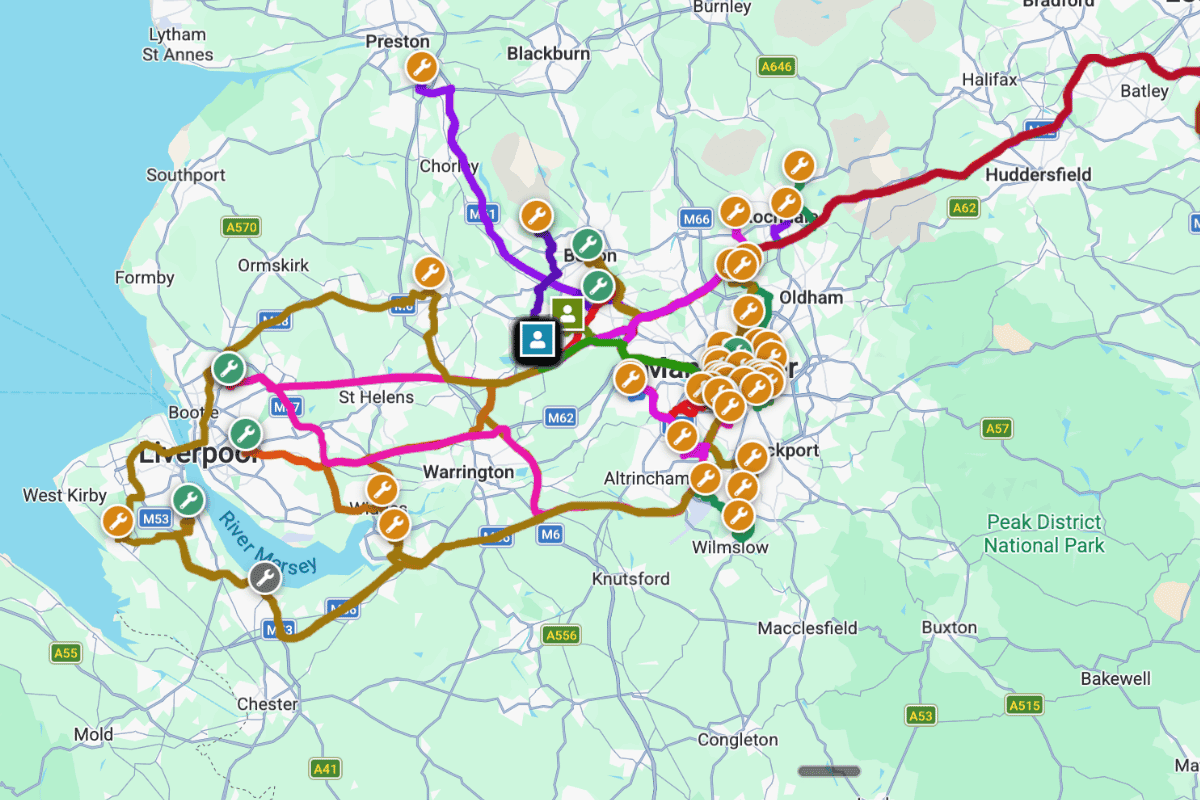
Aquarius, for example, has a predominantly planned-maintenance operation serving commercial kitchens nationwide. A key requirement is being able to take large volumes of recurring work, group jobs into practical service runs and allocate them efficiently to engineers. Defluo has a more diverse operation, spanning commercial drainage, plumbing, heating and building work. It needs to manage several disciplines, customer sites, field teams, compliance information, costs and invoicing within the same business. The Filta Group who are one of TeamPoints longest standing customers have recently added AI informed batched scheduling tools to their scheduling toolbox saving them days of routine administration every month. If we were to examine all of the companies in the UK who service grease traps we would find that each one has slightly different ways of working and slightly different priorities. An effective FSM platform accommodates difference rather than expecting similar service companies to work in the same way.
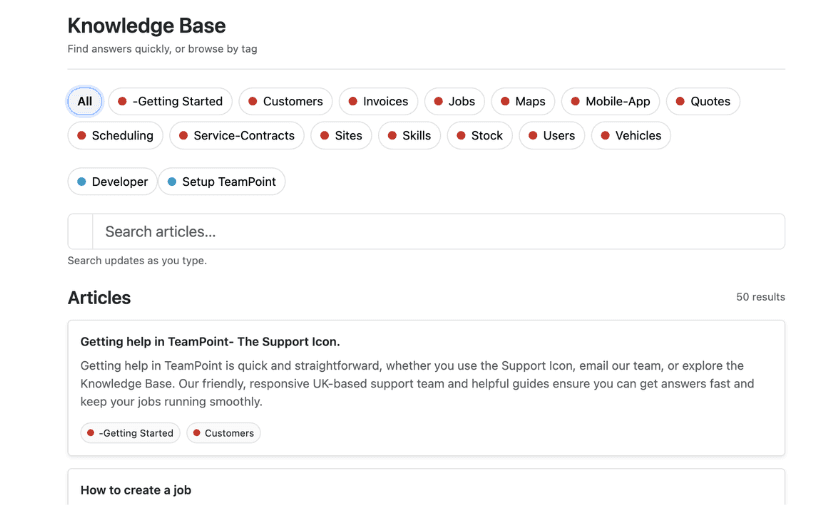
…and even though a platform may be large and complex, if it is going to be genuinely useful, it has to be simple to use. User experience is essential. The software should present each employee with the information and tools relevant to their role, helping them complete their work more quickly, easily and accurately.
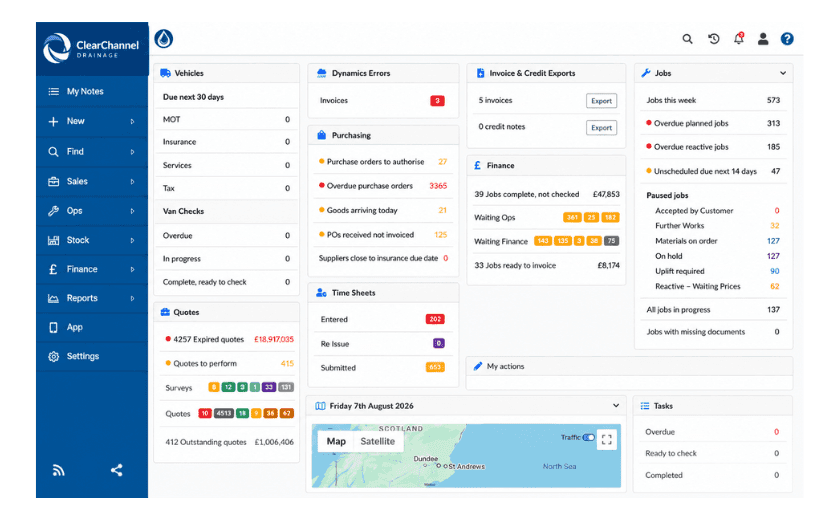
Businesses using TeamPoint set permissions around individual roles, so an engineer, scheduler, accounts user or operations manager for example can each work with the information and functionality relevant to their job. Home screens can be configured around different teams, individuals and responsibilities, giving people a focused working environment while everyone continues to use the same underlying customer, site and job information. Each member of staff has access to what they need whilst management retains a view across the whole operation.
This is increasingly important as the business grows. The software needs the functionality to handle complex work without making routine tasks complicated for the people carrying them out every day.